

The Category That Defied the Internet
Eighty-seven percent. That is the share of consumers who still choose to buy a mattress in a physical store, and it is not a trend. It is a mandate. At a time when direct-to-consumer brands are spending heavily to convince shoppers they do not need a store, the data keeps pointing in the opposite direction. The mattress category is one of the rare exceptions to the online migration that has reshaped retail over the past decade, and the reason is not hard to find. No website has figured out how to replicate the experience of actually lying down on the product. The in-store experience is not competing with e-commerce in this category. It is the reason this category still belongs to physical retail.
But a preference for buying in-store is only an advantage if the store gives the customer a reason to trust what they find there.
What the Customer Is Actually Buying
Something meaningful has shifted in how consumers think about a mattress purchase, and it cuts across every generation. Younger buyers are tracking sleep as a performance input: recovery, focus, output. Older buyers are connecting it to long-term physical health and quality of life. Parents are thinking about it for their kids. Sleep is not a passive activity anymore, and consumers of every age are arriving at the same conclusion: this purchase matters more than they once thought.
That shift changes what the floor needs to do. A customer who walks in thinking about sleep quality, recovery, and long-term wellbeing is ready for a different conversation than one who walked in looking for a deal. The store that reflects the seriousness of the category, in both its design and the way its staff is trained to sell, is positioned to convert at a price point that a clearance-format competitor will never reach.
The premium segment of the mattress market is the fastest-growing part of the business. The 2026 outlook projects 5 percent value growth even as unit volume normalizes. The market is moving upmarket, decisively and across demographics. The floor that is built for that customer captures the margin. The floor that is not watches it walk out the door.
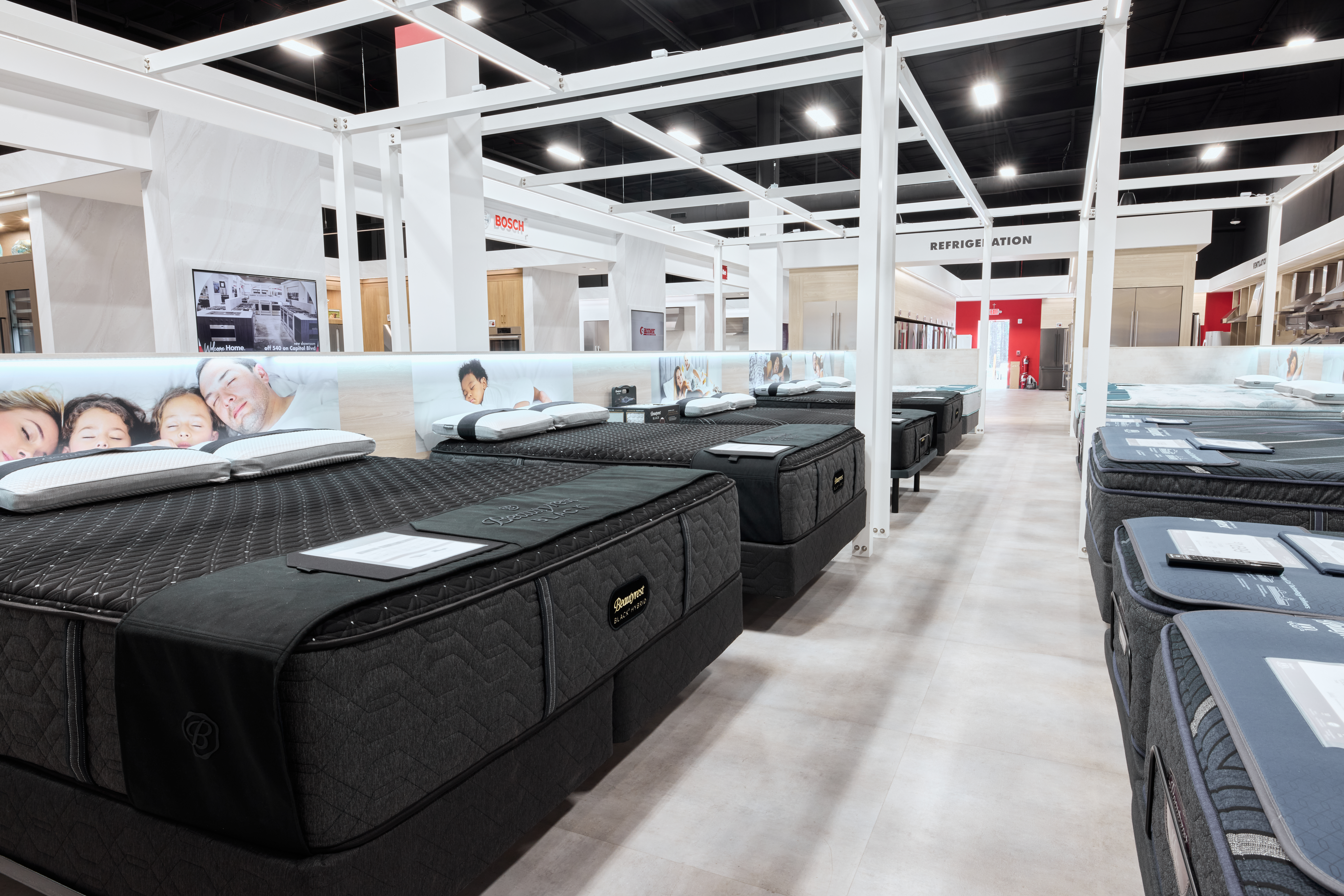
The Floor Is Always Selling
Here is what most dealers underestimate: the physical environment is doing the heavy lifting of the sales conversation. Everything shapes what the customer believes about the value of what they are about to spend: the way product is organized, the sight lines that draw a customer through the space, the experience of moving from one price point to the next and feeling the difference rather than just reading it on a tag. The store design is either building the case for a premium purchase or quietly undermining it. There is no neutral.
A mattress floor designed to hold inventory communicates one thing. A mattress floor designed to build confidence communicates something entirely different. The customer standing in front of a premium sleep system needs the environment around them to confirm that this investment makes sense. When the floor does that work, the sales team’s job becomes dramatically easier. When the floor does not, the team is working against the room on every single transaction.
Most mattress floors were built for the former. The dealers who are winning the margin conversation in this market have built for the latter. The gap between those two floors is where the real money is.
The Opportunity Is Already There
The conditions for a strong mattress business are as good as they have been in years. Consumer preference for buying in-store is durable and well-documented. A broad, cross-generational shift toward sleep awareness is pushing demand toward premium product. Margins in this category are among the most attractive in independent retail, typically running 40 to 50 percent. The dealers who invest in a floor that reflects all of that are the ones who will understand, three years from now, exactly where the lift came from.
If you are looking at your floor and finding yourself uncertain whether it is telling the right story, that is a conversation worth having. Give us a call and let’s think through what your space is capable of. Reach us at 727-639-0804 or visit our website Specialized Retail Services.
References
- Better Sleep Council. (2025). Consumer mattress purchase preference data.
- Fortune Business Insights. (2025). North American mattress market size and forecast.
- ISPA (International Sleep Products Association). (2025). Annual mattress industry forecast: 2025–2026.
- IMARC Group. (2025). S. mattress market CAGR projection through 2034.
- Underhill, P. (2009). Why we buy: The science of shopping. Simon & Schuster.